

Have you tried… getting to know the Grim Reaper in 2D Soulslike Death's Gambit: Afterlife? - reevenonsts
Suffer you tried… getting to know the Inexorable Reaper in 2D Soulslike Death's Gambit: Afterlife?

Living forever: not all it's cracked capable be. Dying all the friggin' time: also non great. Death's Gambit: Afterlife is about finding musical harmony between these two extremes – navigating a world accursed by the pursuit of life eternal while also trying to personally visit Death himself as infrequently as accomplishable. Of course, you volition inevitably bounce back acquainted with the alarming reaper because Death's Gambit is a proud and punishing Soulslike, and its free Afterlife DLC has only added more things to kill you on top of polishing up the whole dang game.
Originally released back in 2018 and now effectively re-released with major additions and improvements, Death's Gambit is a 2D action RPG that leans into two genres colloquially named after the games that distinct them: Soulslikes and Metroidvanias. You know what that means: upgrades to find, areas to unlock, epic bosses to slay, and toughness to manage. This genre mashup doesn't inherently indicate a steep difficulty curve – on that point are easy Soulslikes and Metroidvanias out there, later whol – just Expiry's Ploy sure enough won't disappoint if you get along want something that'll kick your ass.
I missed Death's Gambit the first time roughly but finally picked it up when Afterlife came out, so I played it for eight hours in single sitting. It's not just saving; it's exactly my kind of good, the sort of plot that could pass for a chimera on purpose successful from entirely the things I love about games. Fight is weighty and satisfying with deliberate animations, gaudy abilities, and reactive parries. The grimdark world is pleasing and packed with littler stories fleshing out the tragic characters supporting the overarching game. Simultaneously, End's Gambit has some silly and off-beat moments that give it clip to loosen up and let fun, scarcely as statues give you a moment to breathe and collect yourself – often literally, making sure your entrails don't become your extrails. Thither are talk rats, escargot merchants, you collar Death stammering "Yes, chef" in a high-destruction kitchen. The modulate is altogether colorless, but non oppressively thusly. Dying's aboveboard a pretty nice guy.
Welcome to the Hereafter
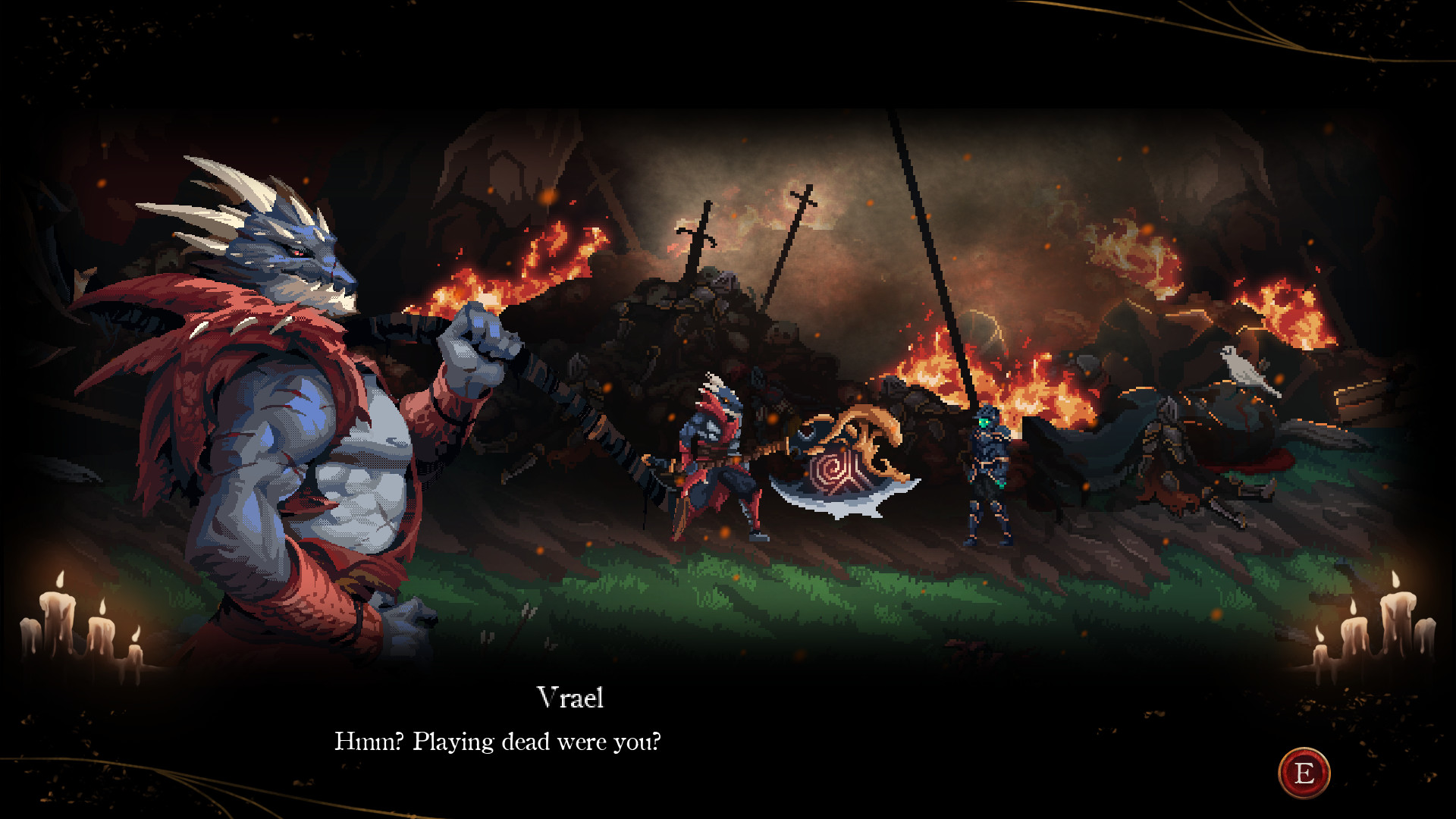
Jean Canellas and Alex Kubodera, the co-founders and lead developers of Death's Gambit developer White Rabbit, tell Maine over Whizz along that the game initially focused more on combat and RPG stuff, and it shows. Death's Gambit is unmistakably in-depth. You've got a crop of stats to pull dow, seven starting classes plus a entire of four skill trees that let you dual-class later happening, dozens of weapons that chassis out respective core types, and equipment slots for everything from helmets and boots to auras and spells.
Building your idealistic adaptation of the agonist, Sorun, is fun and engrossing. Volition you become a tank with an immovable shield, a blood knight who trades wellness for power, or a slippery thief with a obelisk for all occasion? I've been focal point on Finesse and using weapons like scythes and spears, but I could easily reset my stats and examine the greatsword spirit if I wanted to. I don't, though, because I just blew all my levels to reach 40 Finesse so I could wield the really chilly scythe born by the undead business leader I killed earlier. I'm employed to even come out my construct with close to more health, stamina, and cooldown reduction, but for now I'm acquiring carried by a busted combination of Death Acolyte and Line of descent Knight abilities that make me truly immortal for 15 seconds, and how's that for ludonarrative disagreement.
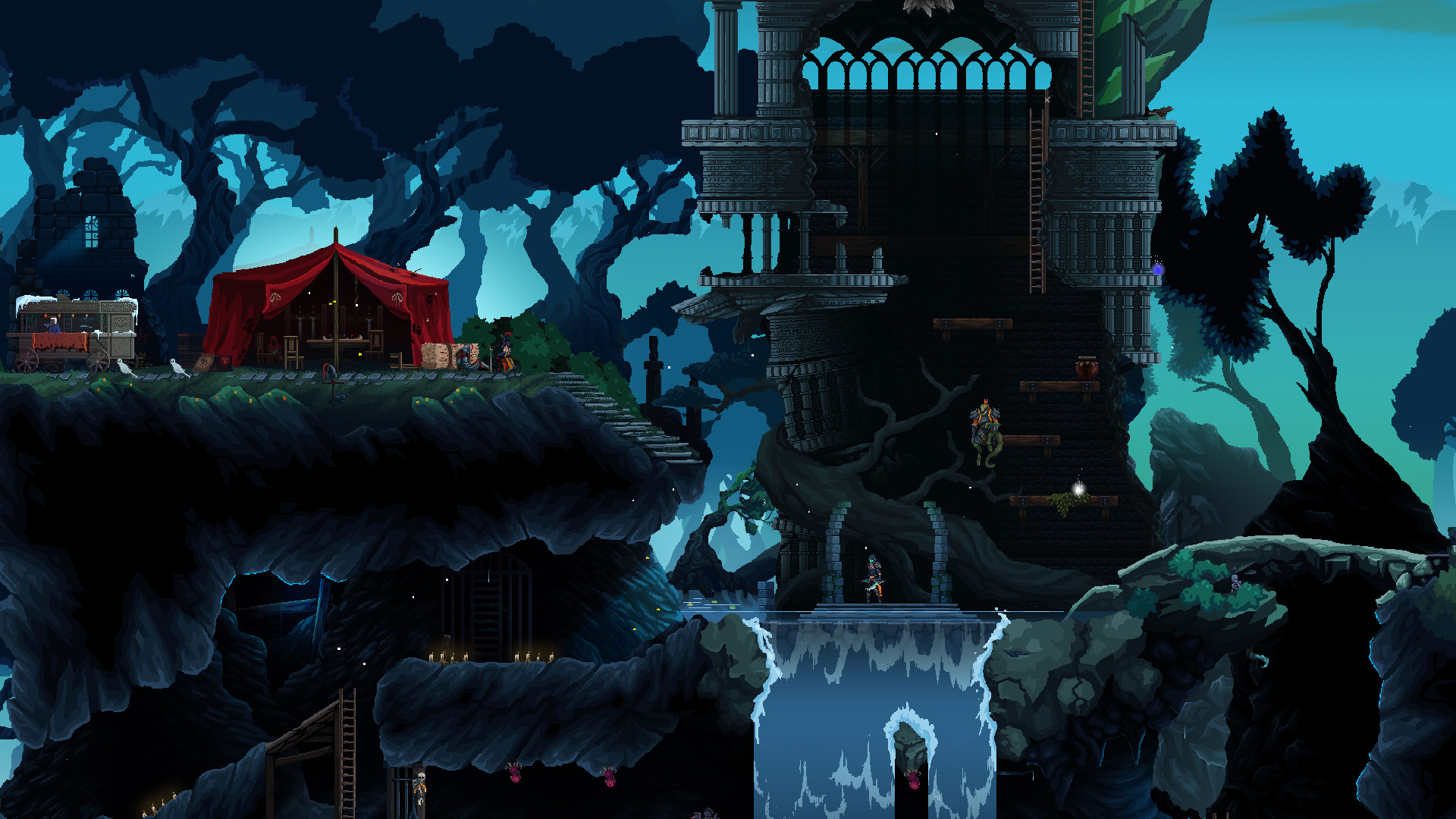
With the release of Hereafter, White Rabbit worked to bring more Metroidvania elements to the game – ane of the many, more changes fueled away player feedback. Non having played the original, I can't exactly spot all the differences, but I can tell you that this game nails the quintessential Metroidvania markers. Sometimes you'll see a boss you were clearly meant to fight earlier and joyfully report the walls with it victimisation your over-leveled body-build. Other multiplication you'll run headlong into an enemy so out of your league that one bump off from it wish humble your unborn grandkids. And unlocking a new ability – the double-jump, the air shoot, and so on – sets off 10 light bulbs in your head at once. "Oh sweet, I can get this chest right away, and reach that ledge to open that door, and hopefully fill dead the last space snippet of the map for that area, and–"
And that, reader, is wherefore I played for eight hours in one sitting. Death's Gambit: Afterlife presents you with such cool stuff to test and discover and overcome. It's an improbably demanding experience but it gives you plenty of exemption within its unmoving rules, and that keeps Maine coming spinal column for more.
Even as importantly, it was clearly made by multitude World Health Organization not single jazz the games that inspired them – and that list includes Dark Souls, Sekiro, Hollow Knight, Metroid, and to a greater extent – but also understand what makes them work.
What makes a good Soulslike
"I wouldn't say it's the difficulty," Canellas says of Soulslikes. "You could definitely make an easy Soulslike and it would still be a Soulslike. To ME, information technology's the stamina system, the weighty feel of armed combat. Those are some of the biggest things that leap out to me. Many a other battle games just focus along devising sure your onslaught comes impossible on frame one and feels really dandy and really satisfying. None, Dark Souls is about organized combat.
"Meanwhile Metroid, for example, focuses on exploration. And I say that even though Metroid Dread openhearted of focuses a lot more on combat than the other Metroids, but yeah, Metroid is 100% all about geographic expedition. You're always rewarded for exploring. You don't get more missiles for beating a combat coming upon, you get them for exploring and finding them hidden in the world."
In recent Metroidvanias like Fistulous Knight and Ori and the Will of the Wisps, finding the double-start power will have you unlock new areas. In Dark Souls, finding an iron key will open another path forward. Death's Ploy: Afterlife manages both, which is key to what makes its mix of genres so compelling. You come that garish picture game-y counseling interwoven with a more insidious level design that leverages the intrigue of the world. That experience of butterfingered and stumbling through a threatening surroundings undoubtedly played a big part in the success of every these games.
"I think the defining factor is definitely the stakes," Kubodera adds. "As you dwindle through your health potions, act up you try to look to a bonfire or go straight to the boss? Having those moments of risk and reward is enormously important."
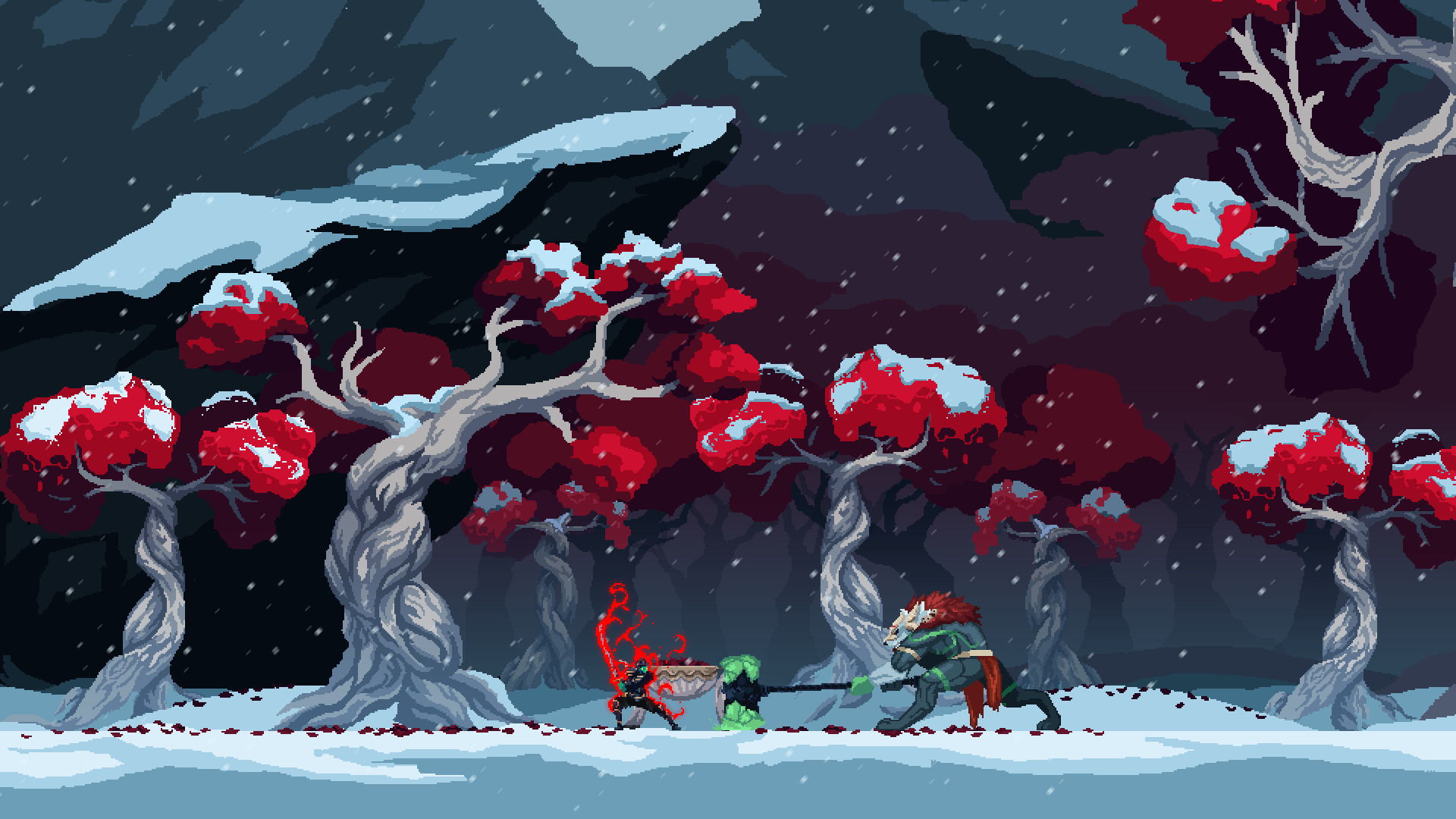
End's Gambit: Afterlife takes that core tenet of risk and applies it in some innovative, deluxe slipway that, even atomic number 3 a big fan of this literary genre, I've never seen. IT uses a similar Estus Flask-look-alike health system that runs on Phoenix Plumes, for example, only there are many more wrinkles to information technology. You can equip distinguishable plumes for varying personal effects – a faster heal vitality, position recovery, and so on. You can reduce your maximum Plume count at a checkpoint to increment your terms output, directly trading health for power. And when you die, instead of losing all your XP as Soulslike custom seems to dictate, you leave a single Plume on the ground. This creates the nightmare scenario of having even less alterative available each time you claim on a dispute that already killed you, only you're pushed forward by the knowledge that you can simply arrest your lost Plume Oregon, if you're truly in a pinch, regenerate it from a checkpoint by spending a level worth of XP.
The traveling to Death's Gambit was made-up with unique ideas like this – as well as Canellas and Kubodera occasionally sacrificing their own salaries to pay their collaborators – and Hereafter builds on all of that with lessons and improvements born of hindsight and a fewer stressful schedule. A small team spent years improving something special that they already spent years on, and then they updated it for clear. Death's Gambit: Afterlife is the definitive version of an excellent game and it brings a sure ending to Sorun's story as substantially as many long age of development. Kubodera teased that there is something more in store for Demise's Gambit, but Canellas also says they'd like to work on something all-new in a different genre, so World Health Organization knows what the future holds. All I know is that I can't wait to sink Sir Thomas More of my sentence into Death's Stratagem: Afterlife, and after sleeping on it for too protracted, I'll make up at the front of the line to play whatever White Rabbit does next.
Death's Gambit: Afterlife is now available on Nintendo Switch and Personal computer, and the update will be coming to PS4 later this year. If you already owned the 2018 version of Decease's Stratagem on Microcomputer surgery PS4, you tooshie get the Afterlife update gratis.

Austin freelanced for the likes of PC Gamer, Eurogamer, IGN, Sports Illustrated, and more while finish his fourth estate point, and he's been with GamesRadar+ since 2019. They've yet to realize that his post as a staff author is just a cover for his career-spanning Destiny column, and he's unbroken the ruse going away with a focus on news and the occasional boast.

Source: https://www.gamesradar.com/have-you-tried-getting-to-know-the-grim-reaper-in-2d-soulslike-deaths-gambit-afterlife/
Posted by: reevenonsts.blogspot.com
0 Response to "Have you tried… getting to know the Grim Reaper in 2D Soulslike Death's Gambit: Afterlife? - reevenonsts"
Post a Comment